
The Golden Phase: Symbolism, Mosaic Patterns, and Romanticism in Gustav Klimt’s The Kiss
Discover how Gustav Klimt transformed gold leaf, Byzantine-inspired mosaic patterns, Art Nouveau symbolism, and romantic intimacy into one of the most iconic masterpieces in art history — and why The Kiss remains perfectly suited to luxurious modern Australian interiors.
Why The Kiss Became Gustav Klimt’s Defining Masterpiece
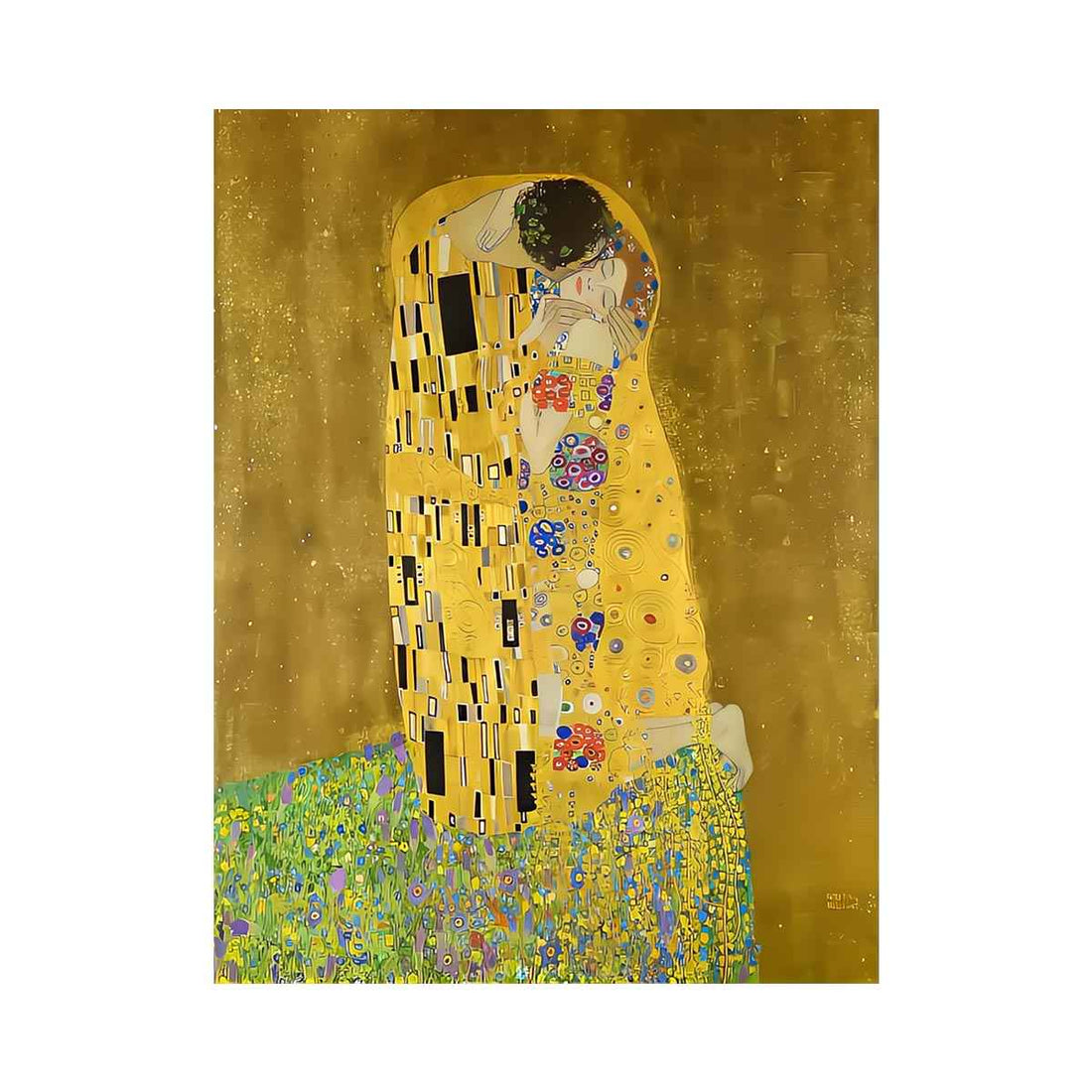
Painted during Klimt’s celebrated Golden Phase, The Kiss represents a remarkable fusion of symbolism, decorative abstraction, sensual intimacy, and luxurious surface design unlike anything seen in European art at the time.
The Golden Phase & Decorative Symbolism
During the early 1900s, Gustav Klimt became fascinated by Byzantine mosaics, gold leaf ornamentation, and decorative surface patterning. These influences transformed his paintings into richly layered visual experiences combining fine art with almost architectural ornamentation.
The Kiss became the ultimate expression of this golden aesthetic language.
- Gold symbolised transcendence and spirituality
- Mosaic patterns created visual rhythm
- Decorative geometry balanced emotional intimacy
- Ornamentation softened realism
- Art Nouveau curves introduced sensual movement

Why Klimt’s Gold Feels So Luxurious
Unlike flat metallic decoration, Klimt layered symbolic gold textures with intricate geometric patterns and painterly detailing, creating extraordinary visual depth that changes dramatically under natural light.
The Symbolism Behind The Kiss
Romanticism Through Pattern & Composition
The Kiss is often interpreted as a symbolic exploration of love, transcendence, intimacy, vulnerability, and emotional surrender. Klimt intentionally blurred the boundary between decorative abstraction and human realism.
The embracing figures almost dissolve into golden ornamentation, suggesting emotional unity beyond physical form.
- Circular patterns symbolised femininity
- Rectangular motifs represented masculinity
- Gold conveyed spiritual elevation
- Floral fields symbolised renewal and fragility
- Ornamentation intensified emotional immersion
“To properly honour Klimt’s intricate tapestry-like surfaces and layered golden textures, reproductions require heavy 400–450 GSM museum-grade canvas capable of preserving subtle ornamental depth and luminous metallic warmth.”
How Mosaic Patterns Create Visual Depth
One of the most fascinating aspects of Klimt’s Golden Phase is his ability to transform decorative pattern into emotional atmosphere.


Why Gustav Klimt Prints Work Beautifully on Canvas
Klimt’s paintings depend heavily on texture, pattern layering, colour fidelity, and luminous surface detail, making premium canvas reproduction quality critically important.
| Standard Poster Prints | Premium Museum-Grade Canvas |
|---|---|
| Flat metallic appearance | Enhanced luminous depth |
| Weak ornamental detail | Visible mosaic texture richness |
| Limited emotional atmosphere | Immersive decorative warmth |
| Basic colour reproduction | Deep archival pigment saturation |
Why 400–450 GSM Canvas Matters for Klimt Reproductions
Heavy museum-grade canvas absorbs archival pigment inks deeply, preserving Klimt’s layered gold tones, intricate decorative patterns, and painterly ornamental textures with dramatically greater richness and visual sophistication.

Why Klimt Works Beautifully in Australian Interiors
Gustav Klimt artwork pairs exceptionally well with contemporary Australian interiors featuring warm neutrals, earthy clay palettes, brass finishes, organic textures, curved furniture, and layered luxury styling.
Oversized Klimt canvas prints create dramatic focal points in open-plan Australian homes, especially under natural coastal lighting where golden textures subtly shift throughout the day.
- Perfect for luxurious statement walls
- Adds warmth to contemporary interiors
- Enhances boutique hotel aesthetics
- Softens minimalist architecture
Frequently Asked Questions
What does The Kiss by Gustav Klimt symbolise?
The Kiss symbolises love, emotional unity, intimacy, transcendence, vulnerability, and spiritual connection through decorative symbolism and romantic abstraction.
Why is Gustav Klimt associated with gold?
During his Golden Phase, Klimt incorporated gold leaf and Byzantine-inspired mosaic aesthetics to create luxurious symbolic surfaces filled with luminous texture and decorative richness.
Why do Gustav Klimt prints work well on canvas?
Canvas reproductions preserve Klimt’s layered ornamentation, painterly texture, and golden visual depth far more effectively than flat poster prints.
What canvas quality is best for Klimt reproductions?
Heavy 400–450 GSM museum-grade canvas with archival pigment inks provides superior texture preservation, colour richness, and decorative detail.